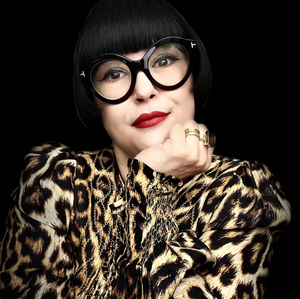
In this captivating interview, Dr. Z speaks with Chelsea Jay, a virtual production supervisor who creates movies and Netflix shows inside game engines after an 18-year career in video games and film production. Chelsea's journey from hand-drawn animation (working for free for a year and a half) to 3D animation (teaching herself by taking notes at coffee shops) to becoming an Unreal Engine specialist demonstrates extraordinary tenacity and self-directed learning.
Chelsea shares her unique path of knowing she was transgender from age four (when told she couldn't play with girls or girl toys anymore), suppressing that identity for decades while building a successful career in male-dominated gaming and film industries, and finally coming out to her wife Jennifer after 16-17 years together. Their relationship, which began in a Chicago goth club 24 years ago, survived this revelation and grew deeper—with Jennifer becoming Chelsea's greatest supporter and style collaborator.
This conversation explores the intersection of art, technology, gender, and self-discovery. Chelsea discusses how her lifelong art practice—filled with unconscious vaginal imagery, occult symbolism, and sigil magic—reflected her suppressed femininity long before transition. She reveals how studying everything from Egyptian sarcophagi design (depicting the visual cortex) to Rosicrucian mysticism to contemporary chaos magic informed both her creative work and gender evolution.
Key topics include: the shocking shift in workplace treatment after wearing pink hair (sudden mansplaining, being talked over in meetings, colleagues looking at her chest instead of eyes), the learning curve of makeup as a visual artist discovering what works through daily selfies, why she takes public selfies as both safety check-ins and self-affirmation, police harassment assuming trans women with condoms are sex workers, the privilege of working from home to avoid constant street harassment, and why she won't go to her kitchen without hair and makeup if the window drapes are open.
Chelsea addresses the "awkward phase" all trans people experience when first presenting authentically, how her wife suggested the name Chelsea (referencing Andy Warhol, the Chelsea Hotel, and artistic legacy), plans for facial feminization surgery with Dr. Justine Lee at UCLA, and her philosophy that HRT helps align physical presentation with internal gender perception—not create womanhood, which was always there.
This interview reveals how video games and character creation provide essential spaces for gender exploration (even for cisgender people discovering authentic selves through D&D characters), the younger generation's increasing gender fluidity, and Chelsea's vision of expression becoming truly genderless. She shares vulnerable truths about being asked invasive questions about her genitals by strangers, the emotional weight of hiding authentic self for career advancement, and the relief of finally choosing discomfort with growth over comfort with misery.
Chelsea's story offers hope, artistic inspiration, and unflinching honesty about the cost of suppression, the power of partnership, the magic in daily selfies, and viewing life as a ride meant for experiencing fully—arriving at the end "with blown-out tires and scratches," having lived authentically rather than comfortably.